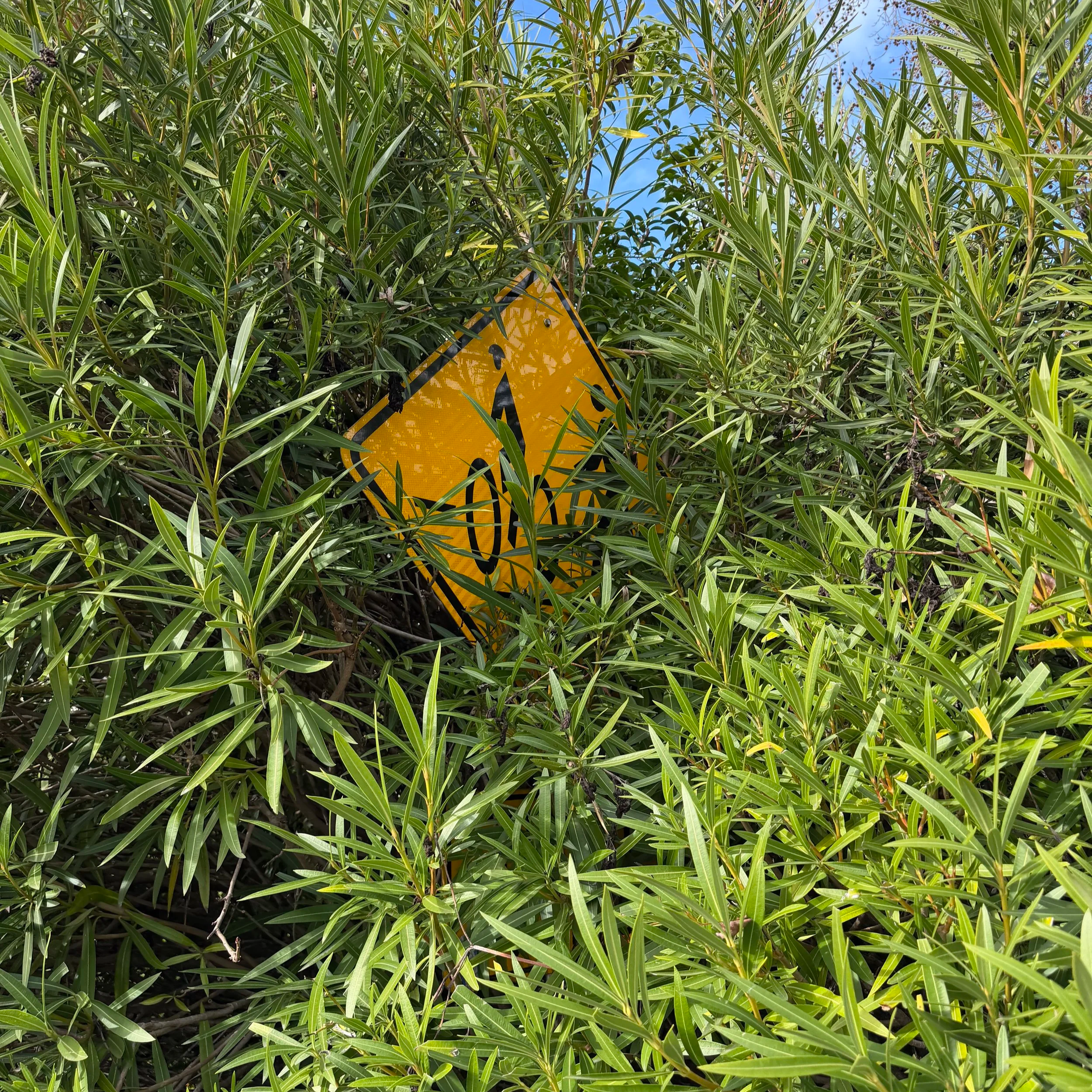
Safety trail crossing sign covered up by plants.
If you live in Lafayette and have kids, you probably know the feeling: you notice a small problem in your neighborhood… and then it quietly lives in your brain for months.
For me, the issue was the trail crossing on Santa Maria Way where the Lafayette-Moraga Trail meets our street. It’s a heavily used path, elementary school kids riding bikes, teens heading to school, commuters, runners, people walking their dogs, and plenty of seniors getting their daily exercise. It’s one of the things that makes our town special.
Drivers often speed quickly down Santa Maria, and many didn’t even realize a trail crossing was there. At a block party last October, a neighbor mentioned there was actually a trail warning sign but it was just completely hidden inside an overgrown tree on a nearby property.
So the problem had a solution already installed by the city… nobody could see it.
And then something very normal happened.
I didn’t do anything.
Not because I didn’t care. Quite the opposite, I thought about it constantly. But I was new to the neighborhood. The homeowner was elderly. I’d heard the caregiver could be difficult to deal with. I debated:
Should I knock?
Ask a neighbor to introduce me?
Email the city?
Trim it myself and hope nobody noticed? (Don’t do this)
Weeks passed. Then months passed. Each time I walked by, I felt a little guilty. If you’ve ever wanted to help your community but felt unsure how to start, you know this exact mental loop.
Here’s the important part: this is normal.
Community improvements rarely fail because people don’t care. They stall because real life is busy. Work, kids, schedules, uncertainty, and social anxiety all get in the way. Wanting to help but not acting right away doesn’t make you a bad neighbor, it makes you a human one.
Then one afternoon the solution appeared in the least dramatic way possible.
I walked by and the homeowner’s landscapers were outside mowing. I introduced myself and said, “Hey. There’s actually a city trail crossing sign in that tree. Would you mind trimming around it so drivers can see it?”
They didn’t hesitate. They were happy to help.
Five minutes later the sign was visible again.
What took months of thinking, worrying, and planning ended up being a simple ask to the right person at the right moment.
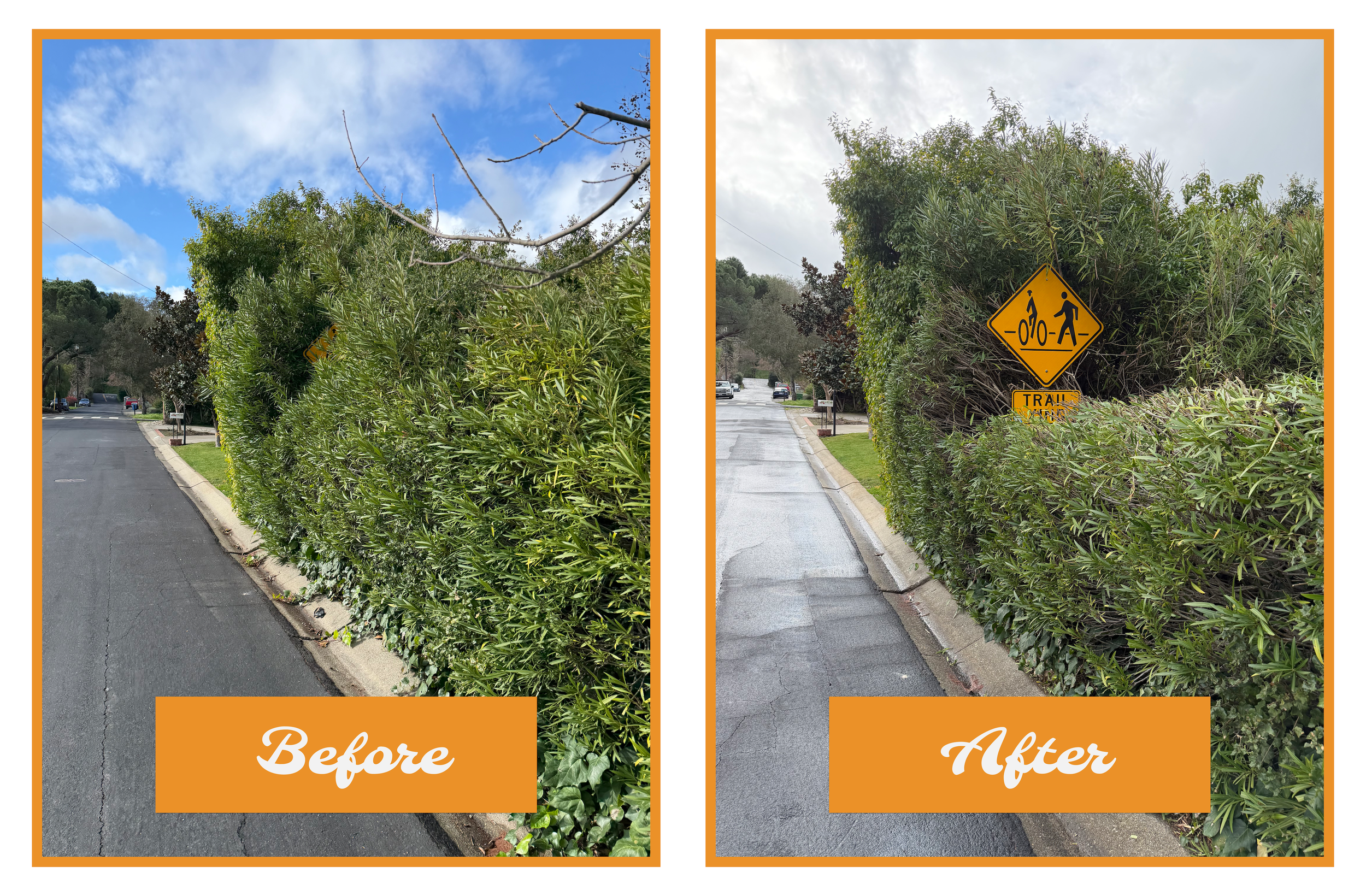
Left side - Before the brush was cleared with only the edge of the sign barely visible. Right side - After the brush was cleared with the entire sign easily visible.
Is it a huge infrastructure project? No.
Did it require a committee? No.
Will it make our street safer for kids and seniors? Yes.
There’s a lesson here for all of us, especially busy working parents who care about where we live but don’t have unlimited time or energy:
You don’t have to fix everything.
You don’t have to lead a movement.
You don’t even have to be the one who solves the problem.
Sometimes the entire contribution is just noticing something and saying one sentence to one person.
Small civic actions feel intimidating because we imagine they require formal processes or perfect planning. But communities actually improve through hundreds of tiny, imperfect, human interactions — conversations on walks, quick asks, and neighbors helping neighbors.
If you’ve been sitting on an idea to make Lafayette a little safer, kinder, or more welcoming, here’s your encouragement: progress doesn’t require boldness. It just requires starting somewhere.
Even if it takes a few months.