
Every kid in Lafayette deserves a safe & direct way to walk or bike to school.
In 2021, Lafayette committed to Vision Zero — eliminating traffic deaths and serious injuries on our streets. Five years later, that commitment still isn't backed by a policy that requires anyone to act on it. We're asking the City Council to turn Vision Zero from a resolution into a binding ordinance, before the next repaving project makes the same mistake.
Why Are We Raising this Now?
Safety loses by default unless the law requires it
Lafayette follows through when it's legally required to. Everything else — including its own Vision Zero commitment — competes for attention and usually loses. Here's one example of the pattern, not the whole problem.
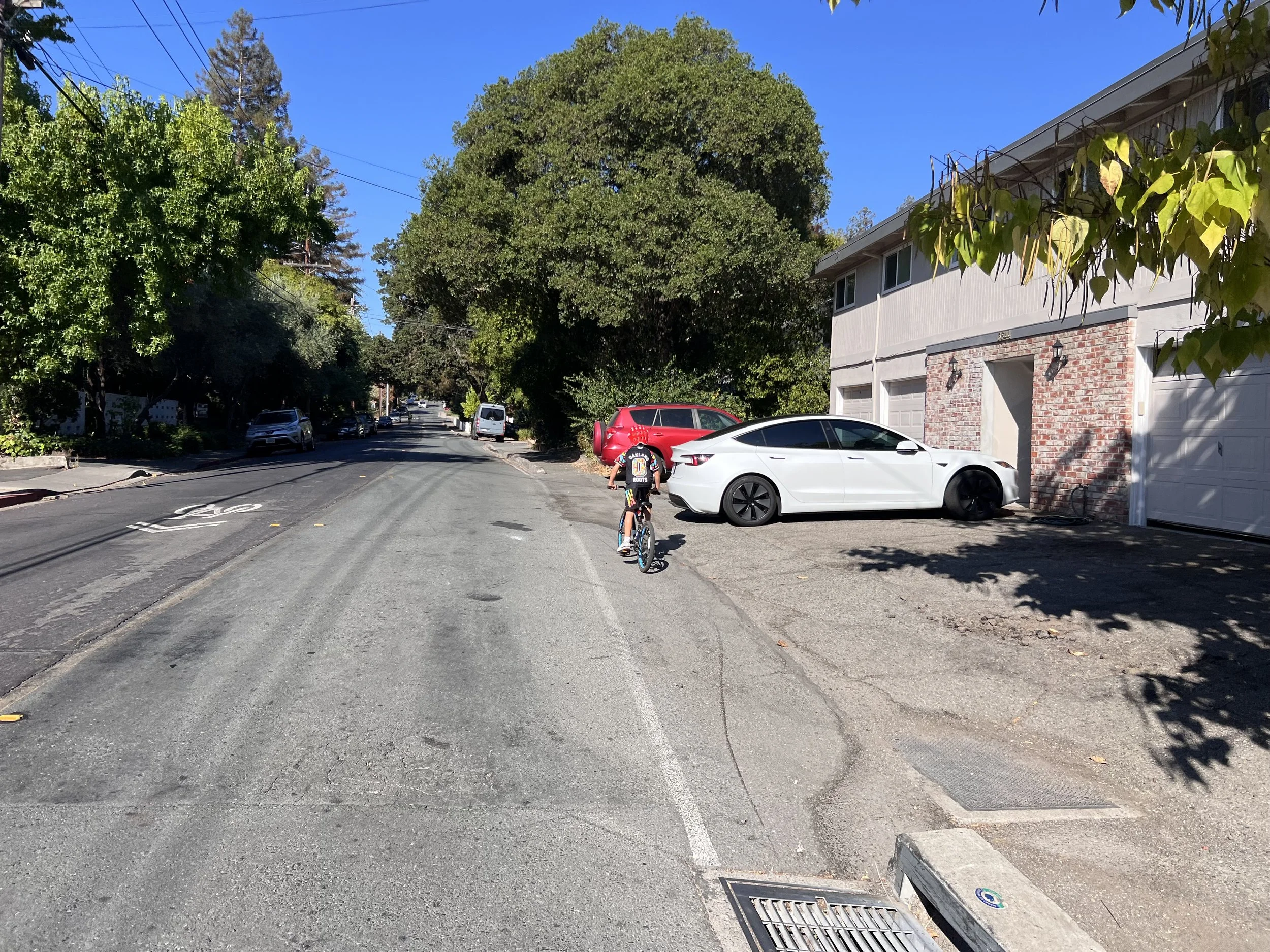
The same repaving project did both. The City installed new ADA curb ramps on Brook Street for wheelchair users, required by federal law. It did not install the safety treatments its own Vision Zero policy calls for, because nothing requires that. One of the new ramps leads directly into a stretch of sidewalk narrow and steep enough that a wheelchair user risks tipping trying to cross it — a reminder that "legally compliant" and "actually usable" aren't the same thing.
FOR EXAMPLE: BROOK STREET
Brook Street is Lafayette's designated bicycle boulevard — the only route connecting our 7-mile multiuse trail to downtown, two schools, and BART. In 2025, the county's mobility plan named it specifically and costed a $100,000 safety project for it. The City repaved it in 2026 without a review to check for pedestrian and bicyclist safety.
When a resident on Brook St. asked for interim safety changes while the curbs were still unset, the one moment low-cost fixes were possible, the City's answer was sharrows only. Curbs went in days later. The window closed for good.
“[Lafayette’s Vision Zero plan] is in concept only and does not provide specific actionable items.”
It's already happening again. The upcoming School Street Path is being planned with no connection shown to the Brook Street bicycle boulevard — two routes the same families would use together, treated as unrelated projects. Early plans for Brook Street even considered removing its bicycle boulevard paint markings entirely, rather than upgrading them. Without a binding standard, gaps like this don't get caught until it's too late to fix cheaply — which is exactly what happened with the curbs.
The Policy Gap
We're not asking Lafayette to promise something new
The city already has Vision Zero language across its General Plan, its Local Roadway Safety Plan, and its 2021 resolution. What's missing is the part that makes any of it apply when a real decision gets made.
What Lafayette Has:
A Resolution
Resolution 2021-50 states Lafayette's intent to reach zero traffic deaths. It sets no requirements for any specific project, paving job, or repair — a good intention with no mechanism.
What Lafayette Needs:
A Binding Ordinance
An ordinance — like Hoboken, NJ's — that makes Vision Zero a standard every capital project, repaving, and development review has to meet, with public reporting to back it up.
Our Key Asks
-
When a safe alternative exists, safety takes priority over speed, parking, or traffic flow.
-
The same safety standard applies to every paving job, repair, and capital project — not just the big, planned ones.
-
Streets are evaluated for who's exposed to risk and how severe it could be — not just where crashes have already occurred.
-
A known hazard doesn't need a crash record before the city is required to act on it.
-
When a project chooses speed or parking over safety, that tradeoff is written down and shown to decision-makers — not made quietly by staff.
-
The city publishes an annual public report: projects delivered, injuries, and where it fell short of Vision Zero.
Take Action
This is Where You Come In
Council members respond to two things: a written record and people in the room.